


The damn war is changing everything around us: our lives, our plans for it, our everyday lives. You don’t have to be Arestovich to talk about the imminent victory of Ukraine, it will definitely happen, but no one knows whether we will have time for Christmas. In any case, for this, those who are not currently holding weapons in their hands need to be as focused as possible and not accidentally add to the war statistics.
Racist rocket attacks have damaged the energy infrastructure this fall, which has caused frequent power outages in many regions. These changes have led to demand for two goods and fuel for them: generators (diesel, gasoline, and there are offers on liquefied gas) and propane-butane cylinders.
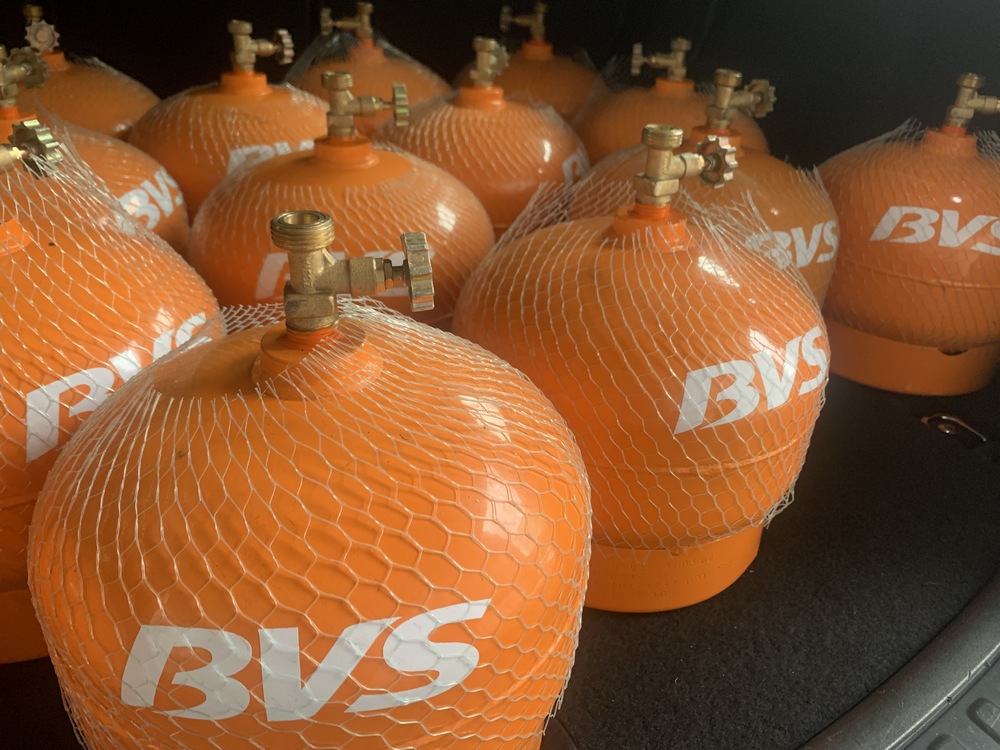
NaftoRynok is dealing with generators together with ExPro Electricity, whose analysts calculated the current electricity deficits, and we learned about the surge in demand for bottled gas back in August, when we purchased the first batch of cylinders for our fighters and our own consumption from our partners BVS (gas and cylinder retailer) and HRC Research (exclusive importer of Czech composite cylinders).

Both companies report a strong current demand for cylinders. The retailer has been dealing with cylinders for a long time, but even the founders of BVS cannot remember what is happening this year, says Maxim Karandeyev, head of the cylinder gas division.
According to Maxim, the demand for cylinders is caused by several reasons: the deoccupied regions were left with a broken natural gas infrastructure, power outages, and a separate segment – the military. “Ukraine urgently needs its own production of cylinders,” Maxim demands.
According to Taras Buyalo, whose office is located in Kyiv, the importer experienced a huge demand with the beginning of the blackouts in October.
You can fill up purchased cylinders with propane-butane according to the rules at Gas Filling Stations (GNP), for example, the closest to Kyiv is in Borodyanka. But the lion’s share of fillings is at gas stations where autogas is sold.
Whether this is correct or not is a debatable issue, but it is a fact that 80-90% of cylinders are filled with gas at gas stations. It is the growing demand for such a service that forced NaftoRynok to compile rules for filling and operating cylinders.
We admit that even we learned about some of them for the first time, because we had never encountered this before.

The information was collected by NaftoRynkom with the help of gas market participants for two categories of people – gas station owners (it is important that this text is “downloaded” in an orderly manner and must be controlled by top managers of companies) and direct consumers – owners of cylinders of any capacity, even tourist KOVEA (this requires more extensive publicity, through administrations and city halls, local and national media).
Table. Indicators when refueling cylinders of Ukrainian (steel) and European (composite) models:
| 5 L | 27 L | 50 L | Cylinder capacity | 12,7 L | 18,2 L | 24,5 L | 26,2 L |
|---|---|---|---|---|---|---|---|
| 3,3 | 12,1 | 18 | Weight of empty cylinder, kg | 4,0 | 4,7 | 5,3 | 5,5 |
| 2,0 | 11,0 | 21,0 | Maximum filling, kg | 5,5 | 8,2 | 11,0 | 12,0 |
| 3,6 | 20,0 | 38,0 | Maximum filling, l | 10,0 | 15,0 | 20,0 | 22,0 |
| 5,3 | 23,1 | 39,0 | Weight of full cylinder, kg | 9,5 | 12,9 | 16,3 | 17,5 |
So, what should Ukrainians who brought a cylinder into their home for the first time, or after a long period of time have encountered an LPG cylinder again, know?
RULES FOR USING AND REFILLING A PROPANE-BUTANE CYLINDER
- Before the first refueling, release the air from a new cylinder
A new cylinder is delivered under pressure, which indicates its tightness and integrity. Open the cylinder valve completely and wait until all the air comes out of it.
- Find out the weight of an empty cylinder and the permitted refueling.
1 liter of propane-butane is approximately 550 grams. The weight and capacity are indicated on the surface of the cylinder or use the table
- Refueling is allowed up to 80% of its volume!
The remaining gas in the cylinder must be checked on the scales and calculated according to the table
- Do not heat the cylinder and avoid direct sunlight.
Excessive temperature will lead to loss of tightness and explosion.
- When using the cylinder, it should be kept in a vertical position only.
Household gas appliances are designed for the vapor phase of the gas, for this the cylinder should be placed vertically – with the valve facing up.
- Do not use a natural gas (methane) stove for a cylinder with liquefied gas (propane-butane). Install a reducer!
Methane has a lower pressure than LPG, so burning propane-butane on a natural gas stove with burners (burner) will be inefficient and to compensate for the pressure, it is necessary to connect a reducer to the hose and install special burners.
- Take into account the temperature difference outside and in the room where propane-butane is used.
It is recommended to place the cylinder in a cooler place with constant ventilation. For example, a veranda or even outside, connecting it to the stove through a hole in the wall.
- Ventilate the room where gas is used!
For complete combustion of 1 cubic meter of methane, 10 cubic meters of air are required, for combustion of a cubic meter of propane-butane, 27 cubic meters of air are required. If the air supply is not provided in full, then during the combustion process a poisonous substance – carbon monoxide (CO) will be released.
- Before refueling and periodically during operation, check the tightness of the valve, hose and other parts.
The tightness before refueling must be checked by the owner of the cylinder and the refueler, this must be done using a soap emulsion (solution) on the joints of the connecting parts. After refueling, if you smell gas – stop using gas appliances (turn off the valves and gas supply taps), take the cylinder outside and ventilate the room and call 104!
IMPORTANT! Familiarize everyone who uses cylinders at home with these rules and safety measures. Pay special attention to children and the elderly who will use propane-butane at home.
According to the World Association of Liquefied Gas, propane-butane is used for cooking and heating by three billion people around the world. Provided that simple rules for using LPG are followed, it remains an affordable and safe type of energy!

Source: NaftoRynok


